Platform Overview
Introduction
This section provides a high-level overview of the ADITO platform architecture. It outlines the major components, communication models, deployment options, and relevant technical infrastructure. This supports understanding how the system operates as a whole and how individual modules interact.
System Architecture
ADITO is built using Java and web technologies, offering a modular and scalable architecture suitable for both cloud-based and in-house appliance environments.
Key Components
| Component | Description |
|---|---|
| ADITO Server | Central backend service that handles business logic, data access, and APIs |
| ADITO Web Client | Web-based frontend, accessed via browser over encrypted WebSocket |
| ADITO Designer | Local development environment based on Apache NetBeans |
| Database Layer | Typically MariaDB or MS SQL Server, holding all application data |
Communication Model
The platform uses a layered communication architecture:
- Communication between client and server is handled via secure WebSocket protocols.
- External systems are integrated through HTTPS-based REST or SOAP interfaces.
- Internal modules communicate via standardized service interfaces.
Deployment Models
ADITO supports flexible deployment strategies for various infrastructure setups.
Cloud Deployment (Recommended)
- Fully managed and hosted by ADITO
- Built-in high availability and scalability
- Automated updates and platform monitoring included
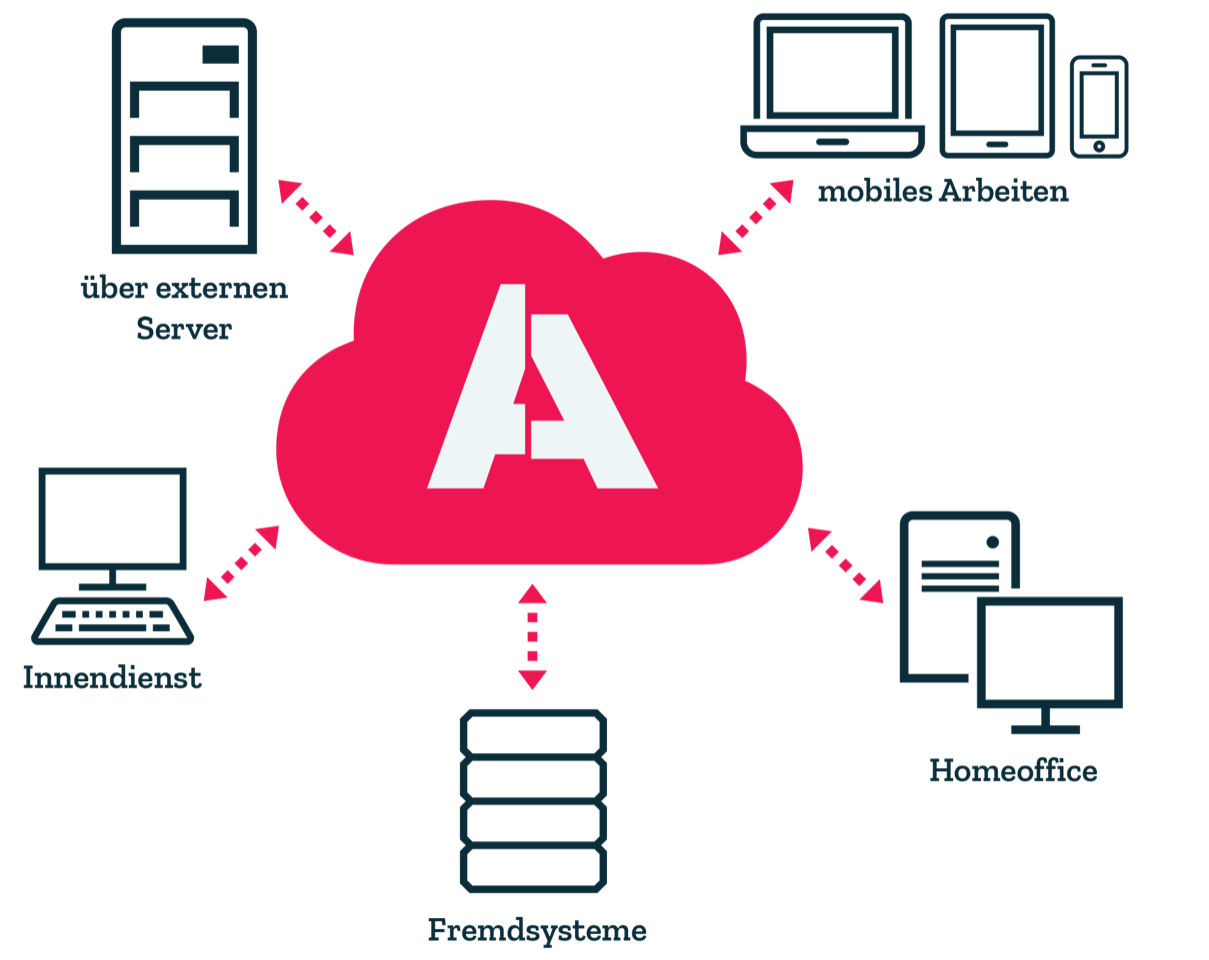
On-Premises Deployment (ADITO Appliance)
- Local installation using a container-based deployment model
- Same architecture and release cycles as cloud deployment
- Managed entirely by the customer within their infrastructure
Technology Stack
| Layer | Technology Stack |
|---|---|
| Backend | Java, Spring Boot, Flowable BPM Engine |
| Frontend | HTML5, WebSocket, JavaScript (Vaadin framework), Lit |
| Customizing Layer | JDito (JavaScript-based scripting) |
| Development Tools | GitLab, Apache NetBeans (via ADITO Designer) |
| Data Layer | MariaDB |
Scalability and Availability
The ADITO platform supports high scalability and availability through:
- Native multi-client and multi-tenant architecture
- Load balancing and clustering with standard infrastructure
- Deployment on containerized environments (Kubernetes)
Security Considerations
ADITO includes several built-in security measures:
- All communication is encrypted (TLS / SSL)
- Role-based access control for users and services
- Data ownership remains with the customer in all deployment models
- Compliance with GDPR and similar data protection regulations
System Integration
ADITO offers extensive integration capabilities via open and standards-based interfaces. These interfaces allow seamless interaction with surrounding IT infrastructure components such as:
- Identity providers for authentication (e.g. LDAP, OAuth2)
- External databases and reporting tools
- Mail and calendar systems (e.g. Exchange)
- ERP systems (e.g. SAP)
- Document management systems (e.g. SharePoint, ELO)
Interfaces can be deployed on the application server or inside the ADITO SQL database layer, depending on the integration scenario.
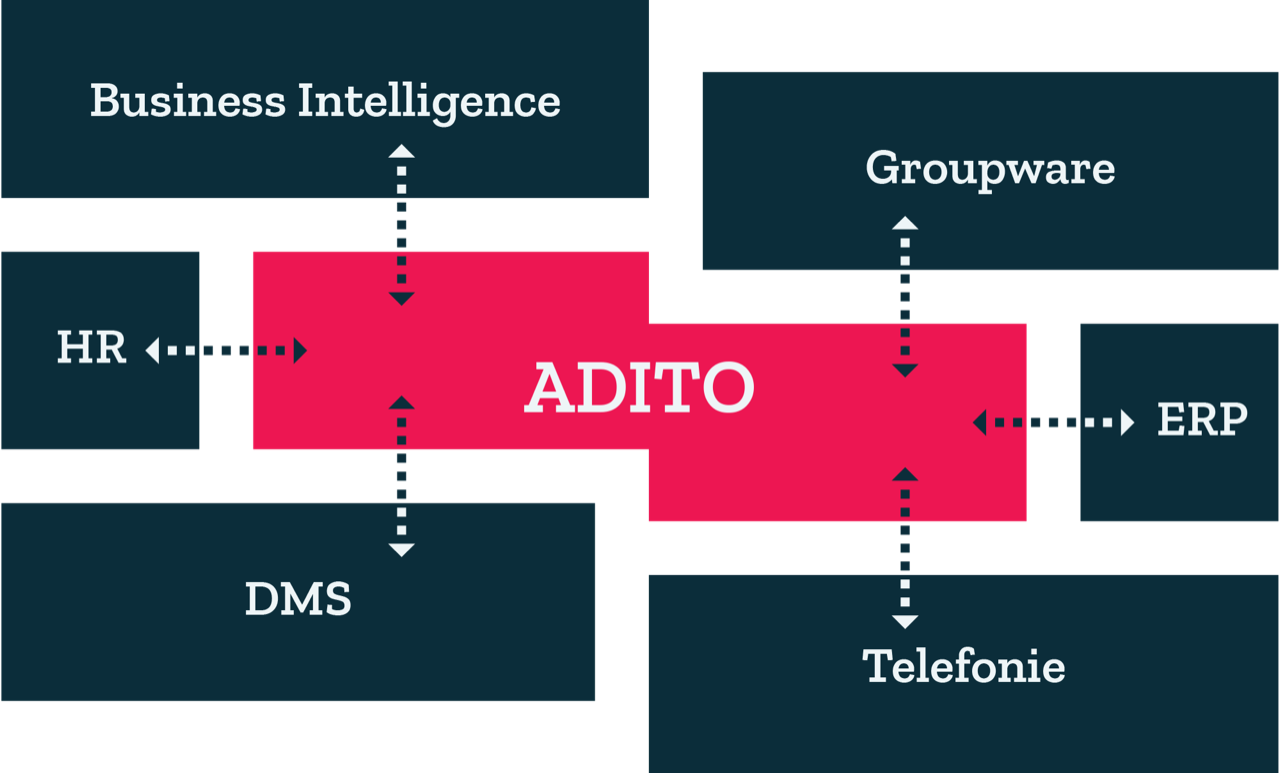
For a detailed list of supported systems and protocols, refer to the System Integrations documentation.